“You’re so feminine,” my lover exclaimed at me, suddenly, in the shower. I was a sophomore in college, and he was one year my senior. He was also my first serious boyfriend. I have always been a late bloomer.
When he said this to me, I felt a wave of shame and guilt wash over me. He said it surprised, shocked, even. I felt like I had deceived him to think I was an adventurous tomboy, when in this moment, I felt small, self-conscious, and vulnerable, naked with him in the shower.
Through the tenor of his exclamation, and my knowledge of his personality, “feminine” felt derogatory. It felt like a disappointment. You see, we had met the spring before, when I was in a flagrantly manic place, thin and limber, spontaneous and driven. Over the summer he had taught me to hitchhike, and I spent my days wandering the San Francisco streets, drinking coffee, out of my mind and out of my body. I hitchhiked up and down Marin County before I knew about the dangers of being a woman. For him to see me now, turned in on myself, self-consciously scrubbing my skin, he was faced with the realization that I was not the vision he had developed of me.
I was faced with this reality too. For when the mania abated, and I became depressed and slow-minded—slow-bodied. I could no longer live up to my expectations of the self into which I thought I had grown in the preceding months.
What did it mean to be feminine? I was always the token girl in the boys’ club growing up. I felt more at ease around masculine people, because I could be my effusive outspoken self without threatening other girls and women. Girls in middle and high school (and college, let’s face it) had always been meanest to me. I was scared of them, and maybe my true inability to fit into their norms for growing up female was uncomfortable and challenging for them too. I was autistic—although I did not know it yet—and could not fathom how to be a correct young woman. So I was just me, and that attracted boys. Not suitors, per se, but friends, many of whom probably wanted to get in my pants—though they would never admit that. I learned to be the person that was easiest for me to be perceived as.
This lover of whom I speak had a habit of lecturing me on how to be good. He evangelized about the importance of kale as we made omelettes for breakfast; he preached about rejecting “Babylon” and being counter-cultural (he was a Bob Marley super-fan). I took in his thinly veiled criticisms of how I live my life as I should—quietly, submissively. I demurely sat on his lap when he indicated I should; dutifully engaged in sex, in a state of dissociation, when he wanted me.
Until that point, I had based my value on the value others prescribed onto me. I had no internal sense of direction to know how to be authentic. When I received praise from people I admired or loved, or criticism from those I pedestalized and feared (and, often, the former and the latter were one in the same), I took their judgments as scripture. I did everything I could to transform my external self into someone that the people who I both respected and feared, would reward. In that process, it may go without saying, I was also making constant judgments of someone’s value as they evaluated me.
It took me years to recognize the power this one moment had on my sense of self. I felt I had to push away all the dark, slow, stickiness that my soul held, and be a being of light, action, and empowerment. Funnily, meeting his father introduced me to the concept of “shadow work,” as he was a psychologist who had written a book about it and liked to wax poetic about integrating the shadow self. I was not in a space to hear about this. At the time it felt like another criticism, another wrong thing about me, that I could not integrate my shadow. I had no sense of what a shadow even was! I dismissed it as quackery—I had grown tired of being told what I should do by my boyfriend and the people in his life. Soon after meeting his parents, we mutually decided to end things. We had fallen in love with images of each other, but the reality of our personalities did not mix. He felt he was ahead in the realms of self-discovery, and I couldn’t manage to pull myself from my depressive episode.
Three years later I had an explosive manic episode. I finally had to seek allopathic treatment (something that my former lover despised as a tool of Babylon), and began to take medication. When I finally calmed down my mind, I had to face the reality that I would have to be a part of the Western medical “system” for the rest of my life. I gained weight. I could not hide my breasts or the curve of my hips, and this bothered me because I had always been rewarded for my masculine-adjacent body in the past. I had many sexual encounters with straight men who used me and did not take me seriously as a woman. I learned to live with more slowness and intentionality.
Four years after that, I learned about “shadow work” in connection with a witchcraft tradition I had entered. This tradition definitely had many people involved who were in the camp of “love and light,” pushing away the dark and sticky bits of being human. But I found there were also possibilities for digging deeper, and understanding who I really am—all of me. So I took some classes and did some workshops. I dug further into the trauma that I also worked on in therapy, and found within it, kernels of inspiration that could actually drive me towards bettering myself. I am sticky. I have baggage and my heart is heavy. This tradition did not shy away from those realities. This was a time of rapid differentiation, as I learned that my experiences were powerful and personal, and that I could build off of them to grow and transform into a more authentic self.
Through my experiences, and how I was treated when presenting my gender in various ways, I’ve come to the realization that mania is masculine-coded, while depression is feminine-coded. This speaks to our culture’s capitalistic-patriarchal obsession with high energy and maniacal success-seeking. This cultural imperative can lead us to push ourselves until we are unwell. We may punish ourselves for being too slow, too receptive, not active enough. We may deny ourselves psychiatric support, especially if we have a mood disorder. When we over-value mania, we under-value slowness, receptivity, kindness, and intimacy. Embracing our femininity is counter-cultural, subversive, and anti-hegemonic.
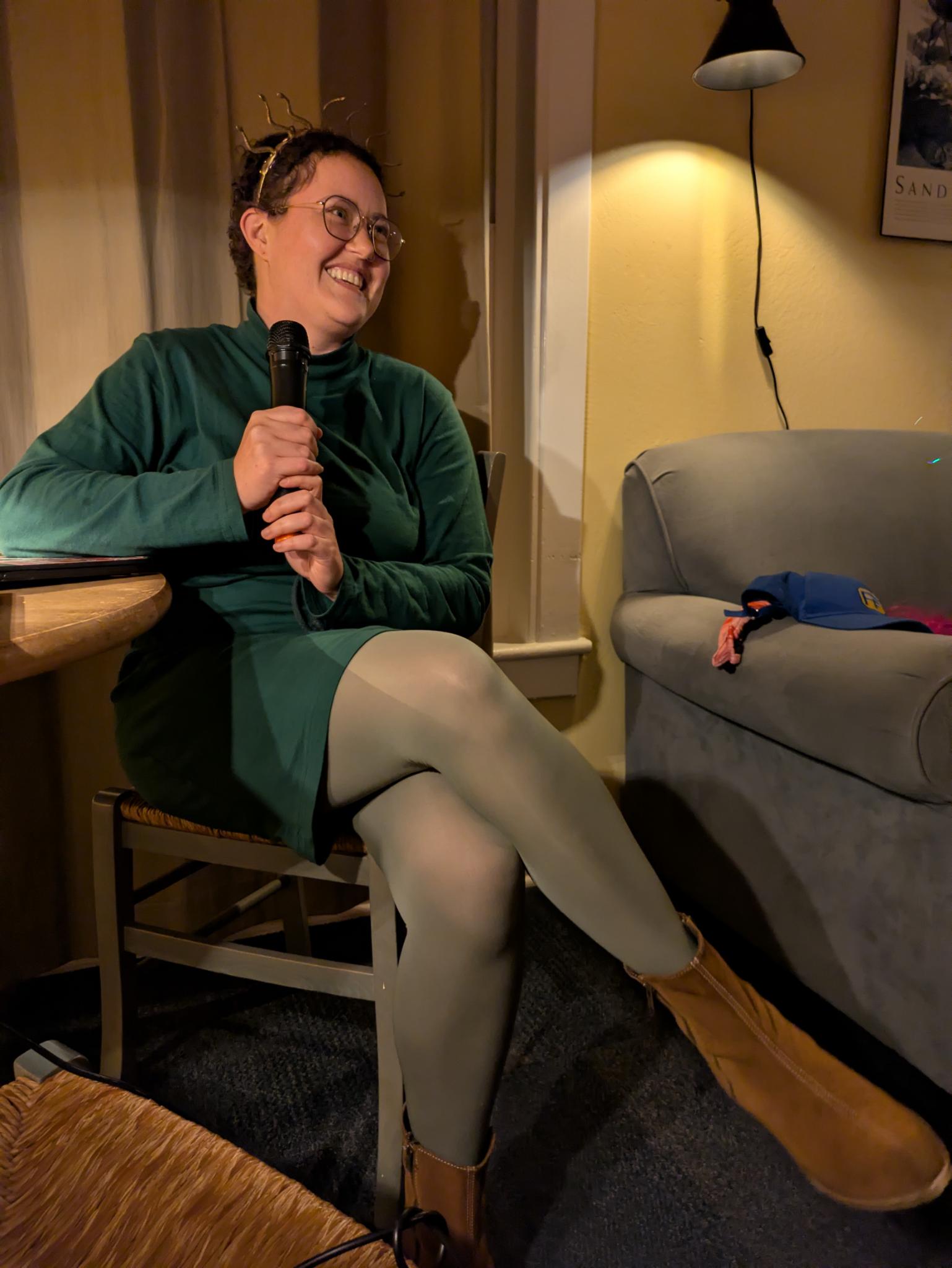
I am feminine. I like makeup and glamour; I am a hopeless romantic; I enjoy sensory pleasures; I am heavyset and love indulging in good food. My breasts give me away as feminine, and I accept that. I am whimsical, passionate, and playful. I’m friends with other femmes. I strive to live within my body as often as I can. Dissociation is tempting but unhelpful in the end. Living in my body poses the challenge of feeling the pain and intensity of my menstruation cycles, sexist hostility, and the deep physicality, sexuality, and sensuousness that scare me as they have scared people in my past. My masculinity and femininity are integrated into one whole: me. I feel powerful because of who I am, not who the men in my life think I should be.
originally published 2022.


Leave a comment